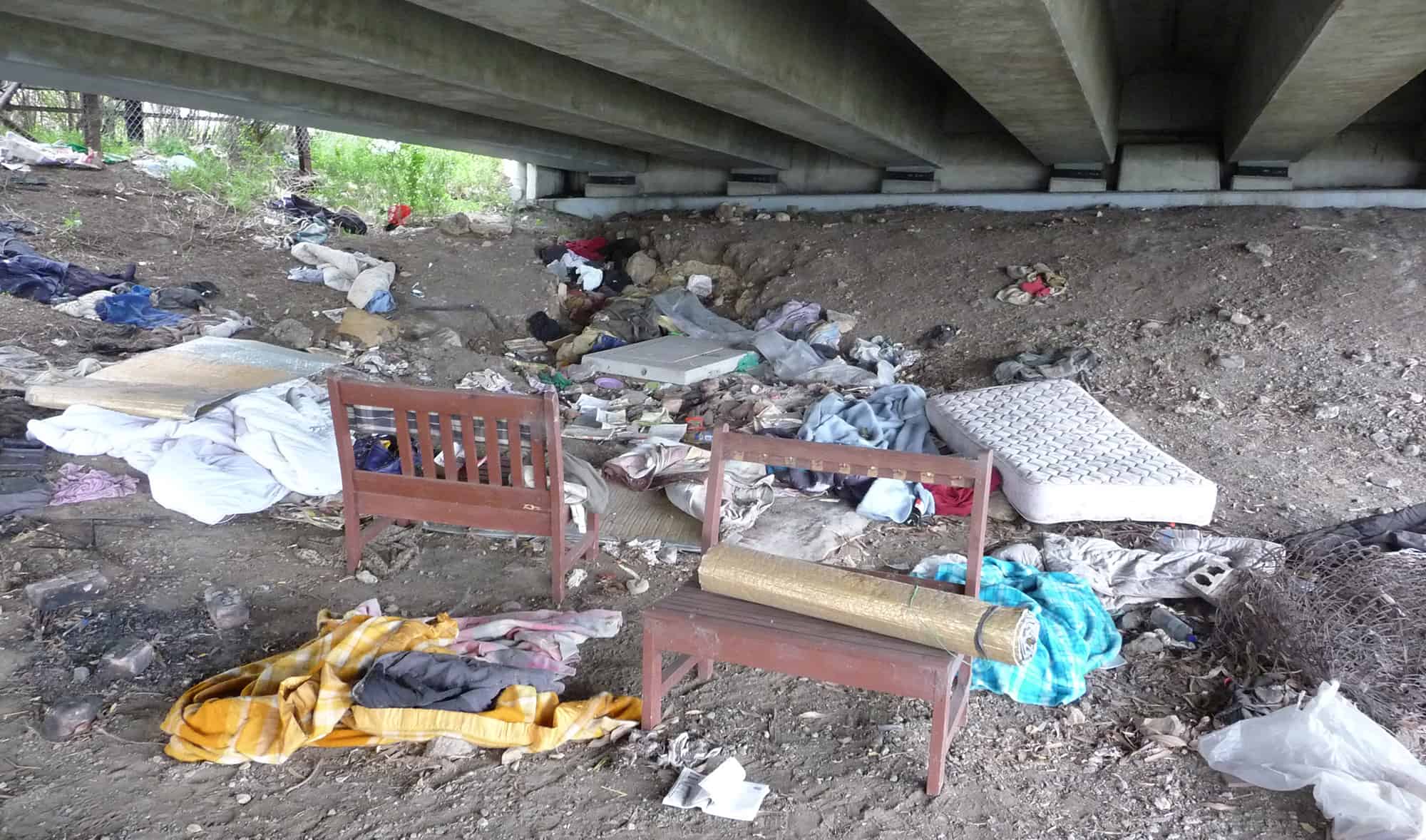
771,480 Americans are homeless on any given night (HUD 2024).
274,224 of these homeless people will be unsheltered (HUD 2024).
69% are men / 29% are women(HUD 2024).
32,880 will be veterans(HUD 2024).
Mental health problems are up to eight times more common in the homeless population.
Every year, roughly 13,000 homeless people die in the US (National Homeless).
Homeless people have an average life expectancy of just 50 years (National Homeless).
47% of unsheltered homeless live in California (Whitehouse).
Australia
The Australian Human Rights Commission stated Human Rights are greatly impacted by sleeping on the streets:
the right to health
the right to personal safety
the right to privacy
the right to non-discrimination
the right to freedom from cruel, inhuman or degrading treatment
The facts:
Up to 21% of Australia’s street sleeping homeless have suffered hypothermia, frostbite or trenchfoot.
Tonight up to 80% of families and 60% of individuals will be turned away from emergency shelters.
UK
2,181 people were recorded as sleeping rough on any one night in England (an increase of 5%)
Street sleeping homeless are 13 times more likely to have experienced violence and 47 times more likely to be victims of theft.
Street sleeping homeless have an average life expectancy of 42 years compared to national average 74 for men and 79 for women
Street sleeping homeless are 35 times more likely to commit suicide than the general population.
New Zealand
No official government figures for the number of homeless people exists
81 people were found sleeping on the streets in a 3km radius of the Auckland sky tower.
Germany
No official government figures for the number of homeless people exists
It is estimated the number of homeless people in Germany at over 250,000 – with 20,000 people living on the street
Questions about Homelessness
Where are the homeless?
Homeless people and unhoused people (without shelter) are in all communities, towns and cities. They are people, like you and I.
Who are the Homeless?
Individuals and families living in accommodation which falls below general community standards:
Detrimental to physical and mental well-being
No access to personal amenities
No security, privacy or autonomy
Where do homeless people sleep?
On the streets and parks
Under bridges, sheds, sporting grounds, bus shelters, doorways
In abandoned buildings
In cars
With friends or extended family
Emergency accommodation & youth refuges
Boarding houses, caravan parks or hotels
How did they become homeless?
Nobody wants to live on the streets - humans are not built for it.
Accident at work
Family problems – violence, sexual abuse, assault
Relationship breakdown
Periods of mental illness
Gambling addiction
Drug and alcohol addiction
Unemployment / Financial problems / Eviction
What is the cost of Homelessness?
People without basic goods can be driven to petty crime.
Some are forced into sexual exploitation.
The above often leads to various forms of substance abuse and addiction - all of which promotes a wide array of desperate behaviour… involving substantial problems and costs for our community.